
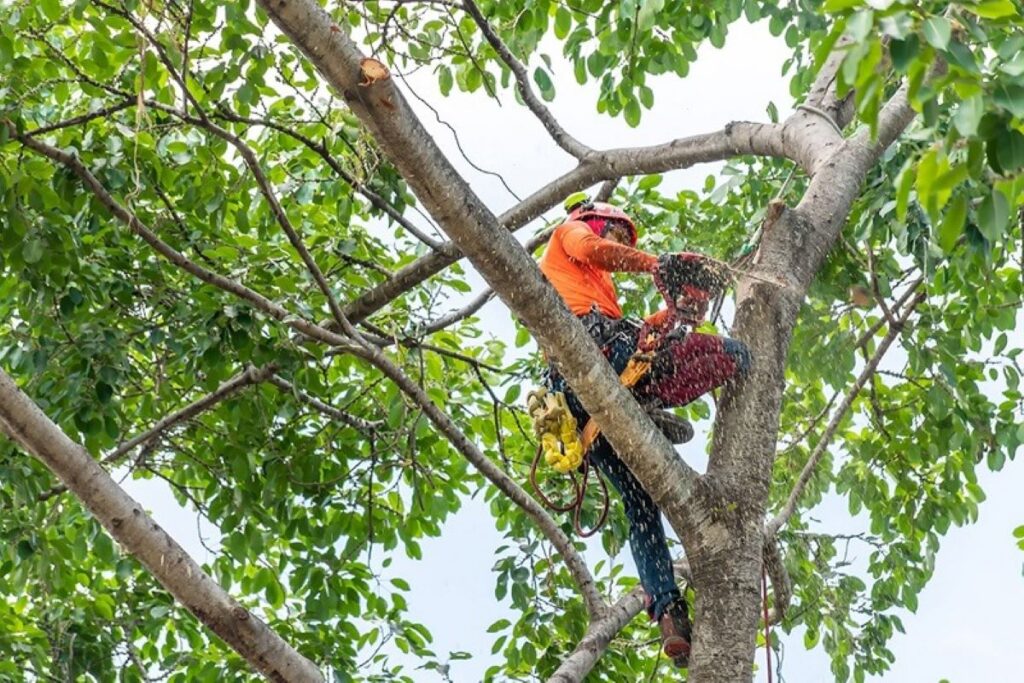
Deciding how to handle a leftover tree stump is a pivotal moment in any Australian landscaping project. Whether you are refreshing a suburban backyard in Melbourne or preparing a construction site in Western Sydney, the choice between stump grinding and full stump removal impacts your budget, your timeline, and the structural integrity of your land.
In 2026, the distinction is clearer than ever: stump grinding is the go-to for aesthetic lawn restoration, while full removal (excavation) is a non-negotiable requirement for major structural works like building foundations or installing a swimming pool.
This guide provides a professional breakdown of both methods to help you choose the right path for your property.
See more: Stump Grinding Sydney: Is Grinding Better Than Stump Removal? A Full Comparison
What is the Difference Between Stump Grinding and Removal?
While the terms are often used interchangeably by homeowners, they involve vastly different mechanical processes and outcomes.
What is Stump Grinding?
Stump grinding uses a high-speed machine equipped with a rotating carbide-tipped blade. The operator “shaves” the stump down to approximately 150mm to 300mm below ground level.
- The Result: The visible portion of the tree is gone, but the deep root system remains underground to decay naturally.
- The Waste: It produces a significant volume of wood mulch, which can be repurposed in your garden.
What is Stump Removal (Excavation)?
Full stump removal involves extracting the entire stump and its associated root ball from the earth. This is typically done using heavy machinery, such as an excavator or a backhoe.
- The Result: A completely “clean” site with no organic matter left to rot or interfere with underground utilities.
- The Waste: It leaves a large void (hole) in the ground that must be backfilled with engineered fill or soil.
Comparison Table: 2026 Cost and Use Cases
| Feature | Stump Grinding | Full Stump Removal |
| Typical Cost (AUD) | $150 – $450 | $600 – $2,500+ |
| Average Duration | 30 – 90 Minutes | 4 – 8+ Hours |
| Invasiveness | Minimal (low impact) | High (heavy machinery) |
| Primary Use Case | Lawns, gardens, turfing | Foundations, pools, slabs |
| Root System | Left to decay | Completely removed |
| Regrowth Risk | Low (species dependent) | Zero |
Why Stump Grinding is Best for Lawns and Gardens
For 90% of residential landscaping projects in Australia, stump grinding is the superior choice. It is efficient, cost-effective, and maintains the health of the surrounding ecosystem.
1. Minimal Landscape Disruption
Unlike excavation, a stump grinder is relatively compact. Professionals can navigate narrow side gates and work near existing garden beds without destroying your entire lawn.
2. Immediate Aesthetic Restoration
Once the stump is ground down, you can immediately cover the area with topsoil and lay new turf. By the time the remaining deep roots decay, the grass has usually established itself.
3. Nutrient Recycling
The wood chips produced by grinding act as a natural mulch. In the Australian climate, keeping this mulch on-site helps retain soil moisture and eventually returns carbon to the soil as it breaks down.
When Full Removal (Excavation) is Required
There are specific “deal-breaker” scenarios where grinding simply won’t suffice. If your 2026 project involves the following, you must opt for full excavation.
Building Foundations and Slabs
If you are extending your home or building a granny flat, you cannot leave a root system in the ground. As roots decay over 5 to 10 years, they create “voids” in the soil. This can lead to soil subsidence, which causes concrete slabs to crack and foundations to shift.
Swimming Pool Installation
Pool shells require perfectly compacted, stable soil. Any organic material—like a large Eucalyptus root ball—will eventually rot, leading to structural failure or “popping” of the pool shell.
Preventing Invasive Species Regrowth
Certain Australian species, such as Willows, Elms, or some types of Acacias, are notorious for “suckering.” If you only grind the surface, the remaining roots may send up new shoots. Full removal is the only way to guarantee these species do not return.
Step-by-Step: The Professional Grinding Process
- Site Inspection & Utility Check: The arborist identifies the tree species and checks for underground services (pipes/cables).
- Clearance: Rocks and debris are removed from the base of the stump to protect the grinder’s teeth.
- The Grind: The machine systematically sweeps across the stump, lowering the level with each pass until it reaches the target depth (usually 200mm).
- Root Tracing: If surface roots are tripping hazards, the operator “chases” them with the grinder.
- Backfilling: The hole is filled with the resulting mulch or fresh topsoil.
Expert Tip: Always ask your contractor if the quote includes the removal of excess mulch. Grinding a large stump can produce three times its volume in chips!
Common Mistakes to Avoid
- DIY Grinder Hire: While hiring a small grinder from a local equipment store might seem cheaper (approx. $200/day), these machines often lack the power for dense Australian hardwoods like Ironbark or Spotted Gum. You may spend the whole day and barely scratch the surface.
- Ignoring Underground Utilities: Never grind or excavate without checking for Telstra lines or water pipes. In Australia, always use the “Before You Dig” service.
- Planting a New Tree Directly Above: You cannot plant a new tree in the exact same spot immediately after grinding. The high carbon content of the leftover sawdust can “lock” nitrogen, preventing the new tree from growing.
FAQ: Frequently Asked Questions
Is stump grinding better than removal?
It depends on your goal. Grinding is better for budgets and lawn aesthetics. Removal is better—and often required—for construction and permanent structures.
How deep does a stump grinder go?
Most residential grinders reach a depth of 150mm to 300mm. This is sufficient for laying turf or planting small shrubs, but not for building foundations.
Will termites be attracted to the leftover roots?
While termites do feed on decaying wood, they are generally more attracted to large, dry stumps above ground. Professional grinding reduces the bulk of the food source and allows the remaining roots to stay moist underground, which is less ideal for many termite species.
Can I build a deck over a ground stump?
Yes, provided the deck is on “piers” or “stumps” that do not sit directly on the decaying wood. If you are pouring a concrete slab for the deck, you should opt for full removal.
What is the average cost of stump grinding in Australia?
In 2026, a standard residential stump (30-60cm) costs between $250 and $350. Factors like hardwood density and difficult access (e.g., stairs or narrow gates) can increase the price.
Conclusion
Choosing between stump grinding vs. removal ultimately comes down to what you plan to do with the space. For a beautiful, level lawn and a cost-effective 2026 landscaping update, stump grinding is almost always the best path. However, if your vision includes a new pool, a shed, or a home extension, investing in full stump removal is an essential step to protect your future structures from soil instability.
Ready to clear your site? Would you like me to help you draft a specific scope of work to send to local Australian arborists for a quote?
Internal Linking & Authority Suggestions
- Internal Link Suggestion: Guide to Australian Tree Removal Permits and Regulations 2026 (Anchor: “Australian Tree Removal Permits”)
- Internal Link Suggestion: Top 5 Australian Hardwoods: How Density Affects Your Garden Maintenance (Anchor: “dense Australian hardwoods”)
- External Reference: Refer to Standards Australia (AS 4373-2007) for professional standards regarding the pruning and management of amenity trees.
- External Reference: Consult the Arboriculture Australia website for a directory of certified professional arborists in your state.